Speaking of covers, as I was last month in relation to my forthcoming book Marvel Arms and Armour, which is out in the autumn, there's also a cover and info up on Amazon for another book I've contributed to, which is also out in the autumn. Edited by Adam Newell, The Art of Classic Sci-Fi Movies: An Illustrated History is a phantasmagoria of sensational SF poster art culled from across the 20th century, and comes complete with an introduction by Kim Newman and essays by Stephen Jones, Margaret A. Weitekamp, Mark Salisbury and me. As you can see, I'm in rarefied company, so it was a thrill to be asked to contribute, and to get to write about two of my favourite science fiction films. As to what those films are, I'll reveal the titles, and the era I discuss, a little nearer the publication date, which is 1 November 2023.
Showing posts with label space opera. Show all posts
Thursday, 13 July 2023
Tuesday, 31 July 2018
Larry Niven's World of Ptavvs, Protector, and A Gift from Earth: A Known Space Route to Ringworld
There are myriad routes through Larry Niven's Known Space – different stories have been published in different configurations in different collections and as different novels at different times over the past fifty years – but the one I've been following has been guided partly by original publication, partly by chronology. I started with World of Ptavvs (1966, Niven's debut novel, set in the 22nd century); then made my way through Tales of Known Space (1975, containing stories from across the entire 2,000-year Known Space future history timeline); then the three-story collection The Long ARM of Gil Hamilton (1976, set on 22nd-century Earth); the novels Protector (1973, set in the 22nd and 24th centuries) and A Gift from Earth (1968, set in the 25th century); then the collection Neutron Star (1968, featuring stories set largely in the 27th century), and I'm currently reading Ringworld (1970, set in the 29th century).
Along the way I've been collecting vintage paperback editions of the books – in bookshops, at book fairs and online – often, hopeless case that I am, in multiple editions and printings, a few of them signed. World of Ptavvs was one of the first I picked up (in London's Skoob Books, part of a huge science fiction paperback haul), before I even had a sense of what Known Space was and how Niven's debut fitted into it; which is perhaps why I found it a little scrappy, in spite of its exuberance and its appealing (to me) central conceit of an ancient, incredibly powerful telepathic alien – a member of a long-extinct Slaver species which a billion and a half years ago subjugated the galaxy – making a monstrous return in the vicinity of 22nd century Earth, with disastrous consequences.
I bought it in its 1978 Futura paperback edition (little realising that that wasn't the first UK paperback edition; that would be the 1971 Sphere edition, predated by the 1968 Macdonald hardback), with cover art by Peter (Andrew) Jones, who, I learned not long after, when I came across a copy of his SF art book Solar Wind (Dragon's Dream, 1980) in a Brighton flea market, painted quite a lot of Larry Niven British paperback covers in the 1970s and '80s, and those of numerous other SF authors besides. Indeed, a reworked version of Jones's painting for the 1979 fourth Orbit/Futura printing of Protector adorns the cover of Solar Wind, depicting Phssthpok, the alien Pak who travels to the Sol system in search of his (far) distant relatives and winds up altering the destiny of an entire planet.
Like others of Niven's novels, Protector is a fix-up, made up of a few different short stories. For me, "Vandervecken", the second half of the book, is the best bit, following unassuming shoe salesman Elroy Truesdale as he tries to get to the bottom of why he was mysteriously abducted and deprived of four months of his life – an investigation that takes him and Belter – i.e. resident of the asteroid belt – Alice Jordan to Kobold, a bizarre, ring doughnut-shaped artificial world with a neutronium sphere at its centre. Thereafter, the narrative escalates into a thrilling interstellar battle – one which I reckon must have been an influence on noted Known Space enthusiast Alastair Reynolds (among many other authors, I'm sure), in particular the extended chase sequence in Redemption Ark – before wrong-footing the reader and coming on like a (micro)cosmic precursor of Justin Cronin's The Passage, as, with horrifyingly inexorable logic, the fate of three million colonists on the planet Home is sealed.
Dean Ellis's cover for the 1973 US Ballantine first edition of Protector (a second printing of which, published in November 1973, two months on from the first printing, I picked up online) does a pretty decent job of depicting Kobold (Ellis also painted the Ballantine first edition cover of Ringworld), whereas Tony Roberts' cover art for the 1974 first and 1976 third printings of the UK Futura/Orbit edition could be any spaceships anywhere in the galaxy. As for the 1975 Futura second printing, that reuses the (uncredited) cover art from the 1973 Ace edition of Best Science Fiction Stories of the Year, and bears no relation to the story whatsoever (although I do rather like it). (The same art was also used for the 1976 Compton Russell edition of Protector, the novel's first and only hardback edition, and one of the scarcest and priciest books in Niven's backlist; copies are usually listed at upwards of £2,000, comparable with the 1972 Gollancz first of Ringworld.)
Michael McInnerney's evocative cover art for the 1971 Sphere edition (and the 1971 Ballantine edition, second printing) of A Gift from Earth – which I acquired a signed copy of – at least alludes to the story within, even if the back cover copy goes somewhat off piste: the colonised plateau on Mount Lookitihat, where the story is set, is called Plateau; We Made It is an entirely separate planet altogether, although I can see how a harried editor skimming the novel's confusing first few paragraphs might have got the wrong end of the stick. In fact the ecology of the 40-mile high Mount Lookithat – so named because the pilot of the first colony ship to reach the place exclaimed "Lookitthat!" when he saw it – is the most interesting thing about the novel, the plot of which concerns a revolution against the ruling class's authoritarian use of organ transplanting to extend their lives (a recurrent theme in Known Space stories). Half the size of California and consisting of a handful of strata, Plateau is the only habitable part of the planet it towers over, the rest of which is a mist-shrouded "eternal searing black calm, useless for any purpose".
The back cover copy of the 1978 Orbit/Futura edition provides a more accurate description of the novel, and adorns another Peter Jones painting, one that I would guess depicts the ramscoop robot from Earth that upsets the precarious societal balance on Plateau. I like Jones's Niven covers a lot; of all the artists that have lent their talents to the author's book covers – and there are some really good ones, as this post demonstrates to a degree – Jones's style and approach seem to me the most in tune with Niven's peculiar mix of hard science and pulpy abandon; see also his covers for, among others, the 1979 Orbit second printing of A World Out of Time, and the 1978 Orbit/Futura edition of Neutron Star.
Speaking of Neutron Star, I plan on writing something about that collection, and Ringworld, soon.
Linked in Friday's Forgotten Books, 3/8/18.
Thursday, 7 June 2018
Larry Niven's Known Space: Collecting and Reading
It was probably only a matter of time before I found my way to Larry Niven's part of the galactic plane. Early last year I rediscovered science fiction in a big way, particularly SF of a relatively modern, space operatic, future historic bent – and anyone who spends any time exploring that region of (imaginative) space will surely find themselves at some point falling into Niven's accretion disc.
Niven has created a variety of universes since his career began in 1964, but his best known is Known Space, a thousand-year future history initially strung together using the short stories he was publishing in Worlds of If, Galaxy and other SF magazines in the 1960s, and then expanded to incorporate his most famous novel, 1970's Ringworld, and its numerous sequels and prequels. Ranging from mankind's first faltering steps on Mars to his colonisation of the Solar System and expansion to the nearby stars, the Known Space stories encompass first contact with aliens, 'organlegging' (the illegal trade in human replacement organs), and even, in the case of the Gil Hamilton tales, science fictional takes on the locked room murder mystery.
I came to Known Space via an afterword in Alastair Reynolds' 2006 collection Galactic North, in which Reynolds describes how he became fascinated by future histories – and inspired to create his own – thanks to Ringworld and Niven's 1975 collection Tales of Known Space: The Universe of Larry Niven. The latter is a key book in that it not only brings together stories ranging from the earliest to, chronologically speaking, the last Known Space tale, but also boasts a Niven bibliography (to that point), a very handy timeline, and in its Ballantine first edition a cover sporting a Rick Sternbach painting depicting the 30 light-year diameter volume of space (according to Sternbach in an afterword about the cover) in which the Known Space tales are set.
As a good many of the Known Space books were published straight to paperback (in the US at least; over here more were published into hardback first), and as paperback seems to me the more natural Niven/Known Space format (reflecting the smart yet pulpy nature of the material), for the most part I've restricted myself to collecting cheap copies of those... although admittedly in multiple editions (with cover art by the likes of Peter Jones and, well, Eddie Jones). Even so, I've managed to get my mitts on some relatively scarce editions, as well as a handful of signed ones (plus some signed non-Known Space Nivens).
Thus far I've read Tales of Known Space, World of Ptavvs (1966; a typically exuberant, slightly scrappy novel in which 22nd-century humanity runs afoul of a mind-controlling alien hailing from a billion-year extinct slaver society) and The Long ARM of Gil Hamilton (1976; in which the eponymous agent of UN police force the Amalgamation of Regional Militia solves three confounding crimes – usually with an organlegging element to them – on 22nd-century Earth), and I'm partway through Protector (half of which is set in the 22nd century, the other half in the 24th). Once I've finished that, I plan on moving on to the 1968 novel A Gift from Earth (which according to the Tales of Known Space timeline is set in the 25th century, although Niven's own site begs to differ), then the 1968 collection Neutron Star (27th-century stories of 'crashlander' Beowulf Shaeffer, among other matters), and lastly Ringworld (set in the 29th century). Whether I'll fly any further into Niven's future history beyond that point remains to be seen.
Niven has created a variety of universes since his career began in 1964, but his best known is Known Space, a thousand-year future history initially strung together using the short stories he was publishing in Worlds of If, Galaxy and other SF magazines in the 1960s, and then expanded to incorporate his most famous novel, 1970's Ringworld, and its numerous sequels and prequels. Ranging from mankind's first faltering steps on Mars to his colonisation of the Solar System and expansion to the nearby stars, the Known Space stories encompass first contact with aliens, 'organlegging' (the illegal trade in human replacement organs), and even, in the case of the Gil Hamilton tales, science fictional takes on the locked room murder mystery.
I came to Known Space via an afterword in Alastair Reynolds' 2006 collection Galactic North, in which Reynolds describes how he became fascinated by future histories – and inspired to create his own – thanks to Ringworld and Niven's 1975 collection Tales of Known Space: The Universe of Larry Niven. The latter is a key book in that it not only brings together stories ranging from the earliest to, chronologically speaking, the last Known Space tale, but also boasts a Niven bibliography (to that point), a very handy timeline, and in its Ballantine first edition a cover sporting a Rick Sternbach painting depicting the 30 light-year diameter volume of space (according to Sternbach in an afterword about the cover) in which the Known Space tales are set.
As a good many of the Known Space books were published straight to paperback (in the US at least; over here more were published into hardback first), and as paperback seems to me the more natural Niven/Known Space format (reflecting the smart yet pulpy nature of the material), for the most part I've restricted myself to collecting cheap copies of those... although admittedly in multiple editions (with cover art by the likes of Peter Jones and, well, Eddie Jones). Even so, I've managed to get my mitts on some relatively scarce editions, as well as a handful of signed ones (plus some signed non-Known Space Nivens).
Thus far I've read Tales of Known Space, World of Ptavvs (1966; a typically exuberant, slightly scrappy novel in which 22nd-century humanity runs afoul of a mind-controlling alien hailing from a billion-year extinct slaver society) and The Long ARM of Gil Hamilton (1976; in which the eponymous agent of UN police force the Amalgamation of Regional Militia solves three confounding crimes – usually with an organlegging element to them – on 22nd-century Earth), and I'm partway through Protector (half of which is set in the 22nd century, the other half in the 24th). Once I've finished that, I plan on moving on to the 1968 novel A Gift from Earth (which according to the Tales of Known Space timeline is set in the 25th century, although Niven's own site begs to differ), then the 1968 collection Neutron Star (27th-century stories of 'crashlander' Beowulf Shaeffer, among other matters), and lastly Ringworld (set in the 29th century). Whether I'll fly any further into Niven's future history beyond that point remains to be seen.
Wednesday, 23 May 2018
Larry Niven's A World Out of Time, Greg Bear's Anvil of Stars, Robert A. Heinlein's Starship Troopers, et al: Recent Science Fiction Reading and Book Collecting
I'd like to blame the distinct lack of activity chez Existential Ennui so far this year on the demands of work, but that wouldn't be entirely accurate. It's true that I have been busy with work – primarily editing Star Trek Magazine and its various spin-offs – but I've also succumbed to a prolonged bout of blogging can't-be-arsed-itis. Other committed bloggers – which, after over a dozen years of blogging on one platform or another, I suppose is what I am, god help me – will surely recognise this malaise as something that just happens to us from time to time, and that there's nothing to be done: either the muse (pffft!) returns on its own, or it doesn't and the blogger shuts up shop. We can but fervently hope that in my case, it'll turn out to be the latter.
But while we await that happy day, I can report that my blogging absence hasn't been matched by a concurrent lack of book collecting and reading. The science fiction odyssey I embarked on last year has proceeded apace, with quite a lot of local charity shop and bookshop scores (plus some online purchases), some of which I've even found time to read. I finished off Alastair Reynolds' Revelation Space series – or at least the three novels that comprise the main part of it, plus Chasm City, plus the various short stories and novellas – which I thoroughly enjoyed, especially Redemption Ark – with its brilliant relativistic interstellar pursuit sequence – and the memorably nasty novella Diamond Dogs. I made a start on Stephen Baxter's Xeelee Sequence, and got a little further along in John Varley's Eight Worlds and Gregory Benford's Galactic Centre series. And I read Joe Haldeman's Forever Free, the belated and slightly bewildering sequel to The Forever War; Robert A. Heinlein's Starship Troopers, which I picked up in a 1975 British NEL hardback first edition at the Lewes Book Fair (jacket by Gordon C. Davies), and which was much more about the training of the troopers than I was expecting; and Greg Bear's The Forge of God and its sequel, Anvil of Stars, the latter of which I really liked – a smart, sombre take on interstellar vengeance and warfare.
I read Anvil of Stars in a signed 1992 Century first edition (jacket illustration by Nick Rodgers), one of numerous signed SF books I've bought over the past few months, many of them novels and short story collections by Larry Niven, who I've got bang into. I've started working my way through his Known Space stories, and I read and loved the first in his The State series, A World Out of Time, a signed copy of the very scarce 1977 Macdonald edition of which – with its fine Tony Roberts wrapper – I found online for a very reasonable price. The story of a modern-day terminal cancer case who's frozen, reawakened in the late 22nd century, then dispatched on a mission to the galactic centre before returning to Earth three million years later, it's stuffed full of mind-bending ideas imparted in Niven's winningly freewheeling manner. If my blogging mojo makes a more sustained return, I expect I'll write some more about Niven – and the other signed SF books I've acquired – in due course.
Linked in Friday's Forgotten Books, 25/3/18.
Monday, 30 April 2018
To Boldly Go (Again)
There's a line in Star Trek Generations – the 1994 big screen baton handover between the original series and Next Generation crews, and a film of which I'm fonder than I have any reasonable right to be – that's been resonating with me recently. It comes during the sequence in the extra-dimensional Nexus, when James T. Kirk is rebuffing Jean-Luc Picard's exhortations to join him in saving the world (well, a world) one last time. As he strides up the stairs in his beautiful Rocky Mountains log cabin towards his doubtless equally beautiful waiting wife, Kirk declares: "This time it's going to be different."
Of course, directly after that Kirk realises that the Nexus is a sham and joins Picard in his battle against planet-destroying El-Aurian nutcase Soran and winds up getting killed (spoiler alert!), but even so, that line has lodged in my mind since late last year, when I once again became editor of the official Star Trek Magazine.
I say 'once again' because it's not the first time I've been editor of Star Trek Magazine. I previously edited it for a couple of years in the early 2000s (when it was known as Star Trek Monthly and was a little slimmer than it is now, as well as being, as its title suggests, monthly, as opposed to the current bimonthly... ish), having quit a career as a music journalist in order to do so – much to the bemusement of more than one friend at the time, who couldn't comprehend why I'd abandon such a 'trendy' profession in order to go and edit a magazine about Star Trek.
And maybe they had a point. Looking back, I spent much of that 25-issue stint in charge of the magazine bending it into shapes that perhaps better suited me and my background – a music special, funny captions, endless best-ofs – than the mag itself – and always with an eye to other opportunities at Titan, the publisher of Star Trek Magazine. (To my credit, that last one did work out: I subsequently got to run the Titan graphic novels dept for five years.)
So this time I think maybe it will be different. This time, and coinciding with my reignited fervour for science fiction and space opera, I'm much more interested in Star Trek itself; in digging into how it is (and was) written, produced, filmed – how it's made; how it works – as well as chronicling its latest incarnation, Star Trek: Discovery. In fact, what with Discovery – the first season of which I loved – and the Abrams/Kelvinverse films – the first two of which I loved... and the third of which I actually didn't mind – right now I'm probably more into Trek than at any time since the heyday of Deep Space Nine 20 years ago, and possibly even since TNG was first on telly.
My first issue back in the captain's chair, #66 (March/April 2018), came out earlier this year, and my second, #67 (Summer 2018), is out in the US now and in the UK in a few weeks; I'm pretty pleased with how that one in particular – a DS9 anniversary issue which delves into how that show's first season came together 25 years ago (plus some Discovery stuff, including an interview I did with Wilson Cruz) – has turned out. Whether or not I can extend my prior two-year tenure as editor into a five-year mission – or even an ongoing one – remains to be seen, but I've plenty of plans for the main magazine and its various spin-off specials (including a Discovery one later this year; more on that anon).
As Captain Kirk says to Captain Picard in Generations: "Don't let them promote you... don't let them transfer you... don't let them do anything that takes you off the bridge of that ship, because while you're there... you can make a difference."
The covers illustrating this post are by Star Trek Magazine's regular designer, the supremely talented Commander Martin Stiff from Amazing15.
Of course, directly after that Kirk realises that the Nexus is a sham and joins Picard in his battle against planet-destroying El-Aurian nutcase Soran and winds up getting killed (spoiler alert!), but even so, that line has lodged in my mind since late last year, when I once again became editor of the official Star Trek Magazine.
I say 'once again' because it's not the first time I've been editor of Star Trek Magazine. I previously edited it for a couple of years in the early 2000s (when it was known as Star Trek Monthly and was a little slimmer than it is now, as well as being, as its title suggests, monthly, as opposed to the current bimonthly... ish), having quit a career as a music journalist in order to do so – much to the bemusement of more than one friend at the time, who couldn't comprehend why I'd abandon such a 'trendy' profession in order to go and edit a magazine about Star Trek.
And maybe they had a point. Looking back, I spent much of that 25-issue stint in charge of the magazine bending it into shapes that perhaps better suited me and my background – a music special, funny captions, endless best-ofs – than the mag itself – and always with an eye to other opportunities at Titan, the publisher of Star Trek Magazine. (To my credit, that last one did work out: I subsequently got to run the Titan graphic novels dept for five years.)
So this time I think maybe it will be different. This time, and coinciding with my reignited fervour for science fiction and space opera, I'm much more interested in Star Trek itself; in digging into how it is (and was) written, produced, filmed – how it's made; how it works – as well as chronicling its latest incarnation, Star Trek: Discovery. In fact, what with Discovery – the first season of which I loved – and the Abrams/Kelvinverse films – the first two of which I loved... and the third of which I actually didn't mind – right now I'm probably more into Trek than at any time since the heyday of Deep Space Nine 20 years ago, and possibly even since TNG was first on telly.
My first issue back in the captain's chair, #66 (March/April 2018), came out earlier this year, and my second, #67 (Summer 2018), is out in the US now and in the UK in a few weeks; I'm pretty pleased with how that one in particular – a DS9 anniversary issue which delves into how that show's first season came together 25 years ago (plus some Discovery stuff, including an interview I did with Wilson Cruz) – has turned out. Whether or not I can extend my prior two-year tenure as editor into a five-year mission – or even an ongoing one – remains to be seen, but I've plenty of plans for the main magazine and its various spin-off specials (including a Discovery one later this year; more on that anon).
As Captain Kirk says to Captain Picard in Generations: "Don't let them promote you... don't let them transfer you... don't let them do anything that takes you off the bridge of that ship, because while you're there... you can make a difference."
The covers illustrating this post are by Star Trek Magazine's regular designer, the supremely talented Commander Martin Stiff from Amazing15.
Tuesday, 19 December 2017
2017: The Final Science Fiction Odyssey
The year is fast disappearing on me – on all of us I suppose, although being somewhat of a solipsist I'll confess I'm not entirely convinced there is an 'us' – so I'd best get my skates on if I want to cobble together any kind of coda to my 2017 science fiction book-collecting odyssey. And it will have to be a coda rather than a full-blown conclusion; unfortunately – or maybe fortunately, if anyone besides myself is unfortunate enough to be reading this, which, as I say, I have my doubts about – pressures of work (in a good way; I might return to that in the new year) prevent me from embarking on the kind of exhaustive account that has characterised previous instalments in my chronicles of my SF-collecting odyssey. Instead, on this last leg, rather than detailing every bookshop I've visited, I'll simply summarise some of the better scores of recent months, in particular two huge hauls – plus a more modest one – of paperbacks from London.
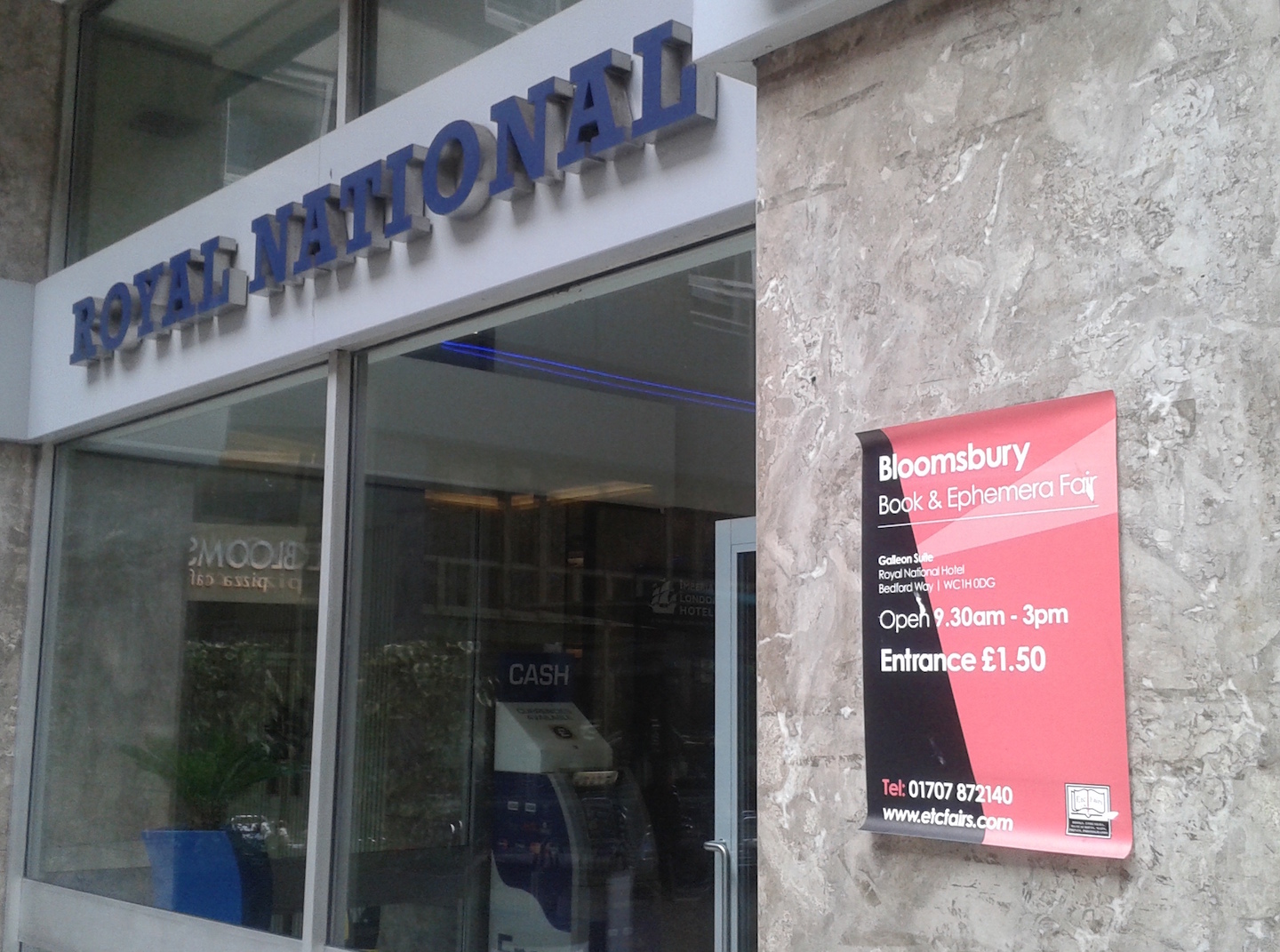
The two huge hauls came from two locales practically next door to each other: Skoob Books in the Brunswick Centre and the most recent Paperback & Pulp Book Fair, which took place at the Royal National Hotel on 29 October. The former I happened to stop in at during an excursion to London to discover they'd just got in a big SF collection; among other things I secured paperback firsts of Bruce Sterling's Schismatrix (a book that was very high up on my list of wants), John Varley's Wizard, Ian Watson's debut novel The Embedding, Gregory Benford's Against Infinity, plus various Haldemans (notably two parts of the Worlds trilogy, the third part of which I already had in hardback), a first printing of James Herbert's The Rats (not strictly SF, but I couldn't resist it; once upon a time I had a lot of time for Herbert) and a fair number of Larry Nivens and Jerry Pournelles.
I secured more Nivens and Pournelles at the Paperback & Pulp Book Fair – including a signed Ballantine first of The Long Arm of Gil Hamilton, a steal at two quid – and at the location of the more modest haul, Any Amount of Books on Charing Cross Road, where I also nabbed paperback firsts of Gordon R. Dickson's Dorsai trilogy and a bunch of Stephen Baxters, which make a nice set with a signed paperback first of Baxter's debut novel, Raft, I'd previously bought online. As for the Paperback & Pulp Fair itself, that offered up among other things first paperback editions of Bob Shaw's Orbitsville, Algis Budrys' Rogue Moon and Gordon R. Dickson's Necromancer, all of which I was keen to try, plus Orson Scott Card's Ender's Game, Kim Stanley Robinson's Icehenge, Anne McCaffrey's Restoree, a couple of Ursula Le Guins, and more besides.
And all of that's without getting into the SF I've picked up in Lewes and Brighton and one or two other places over the past few months – too many books to detail here, although I will just mention three by James Tiptree, Jr., alias Alice Sheldon, an author I was guided towards by Book Glutton and subsequently came across paperback first editions of her two novels in Lewes and Leigh-on-Sea and was given a collection of her short stories. I've only read a couple of the stories so far, but on the basis of those I'll certainly be reading more.
And with that, my 2017 SF odyssey is done – and so, more than likely, is my 2017 blogging, although I may manage to post a big long list of the books and comics I read before the year is out. Merry Christmas. (Not that there is anyone out there to wish Merry Christmas to...)
Tuesday, 17 October 2017
2017: Science Fiction Odyssey Three
I suppose really this post should be titled '2017: Science Fiction Odyssey Six' or something, given that besides two prior similarly-titled posts on my continuing science fiction book collecting odyssey, '2017: A Science Fiction Odyssey' and '2017: Odyssey to... Bookshops in Worthing, Leigh-on-Sea and Tunbridge Wells', I've done SF-book-collecting-odyssey posts centring on the Isle of Wight, Brighton and the Lewes Book Fair. But Arthur C. Clarke only wrote four books in his series – I've been riffing on the titles of Clarke's 'Space Odyssey' novels, you see – and I'd already ballsed up the numbering by not making the Isle of Wight post the second part of the odyssey, so '2017: Science Fiction Odyssey Three' it is.
And the odyssey this time takes in Littlehampton, Worthing (again), Brighton (again), Tonbridge and Sydenham, all of which I've trekked to in search of secondhand SF over the past month or so. A warning: anyone expecting picturesque (unlikely in the cases of Worthing and Sydenham I know, but anyway) shots of those far-flung locales is likely to be sorely disappointed; as in previous odyssey posts, this one will largely consist of photographs of my hand holding books outside – and mostly obscuring, helpfully – secondhand bookshops, so depending on your mileage for partially obscured secondhand bookshops/books/hands, you may want to stop reading now.
My first stop on this leg of the odyssey was the coastal town of Littlehampton, about an hour from Lewes (where I live) by car or indeed by train, which was how I travelled on this occasion. I ventured there drawn by the Fireside Bookshop, which relocated to Littlehampton from the Lake District a couple of years ago and which I'd been meaning to visit ever since I learned of that relocation. Situated in a small arcade at the far end of the high street from the train station, it's an attractive shop with a diverse stock arranged around one large and one smaller room, but though its (largely paperback) fiction section in the main room stretches the length of its front windows, when I visited there wasn't much in the way of science fiction on offer. However, the owner had just bought in an SF collection, and although he hadn't yet catalogued it all, he did have a few bits behind the counter. After a look through the two small proffered piles I selected this:
A pristine first edition of Greg Bear's alien invasion/end of the world epic The Forge of God, published in hardback by Gollancz in 1987, dust jacket illustration by John Harris. That'll do nicely.
Heading back towards Lewes I stopped off at Worthing in order to have another look for SF in Badger's Books. The box of SF paperbacks I found before was still there, and this time I plucked from it three paperback firsts of early novels by Ian Watson – The Martian Inca (Granada/Panther, 1978, cover illustration by Peter Gudynas), Alien Embassy (Granada/Panther, 1979) and Miracle Visitors (Granada/Panther, 1980) – and two paperback firsts of novels by Bob Shaw: Ground Zero Man (Corgi, 1976) and The Ceres Solution (Granada, 1983). However, as I was paying for those, I spied in the shelf of signed books running high up along one wall in the first room a Peter F. Hamilton book, which on closer inspection turned out to be this:
A copy of the signed, limited, numbered, slipcased edition of The Temporal Void, published by Macmillan in 2008, dust jacket and box illustration by Jim Burns. The second in Hamilton's Void Trilogy, it's the sequel to 2007's The Dreaming Void, a first edition of which I'd found in the Lewes Book Centre not long before. Splendid.
Living in Lewes as I do, it's not unusual for me to buy books in nearby Brighton; but it is unusual for me to take a picture of whichever books I've bought outside whichever bookshop I've bought them in – which is precisely what I did one sunny Saturday early in September (when I was ostensibly in Brighton for my friend – and Brit comics/dinosaur art superstar – Steve White's stag do) at Colin Page Antiquarian Books (which, sadly, will be closing down quite soon, passing trade apparently not being enough to justify the cost of keeping a shop in the centre of Brighton) after buying some SF paperbacks from the table outside the shop, so I figured I might as well include that picture in this post. On the top is a 1982 New English Library first paperback edition of Search for the Sun!, the first novel in Colin Kapp's Cageworld series, cover illustration by Gerald Grace; then a 1979 Hamlyn paperback first of Healer, the debut novel by F. Paul Wilson (who recently wrote the foreword to a book I project edited, The Art of the Pulps); and a 1969 Coronet paperback first of SF anthology Seven Trips Through Time and Space, edited by Groff Conklin and featuring stories by among others Larry Niven and Cordwainer Smith.
While Brighton is for me a frequent destination, Tonbridge, in Kent, about an hour's drive north from Lewes, isn't (I've probably been there a handful of times, one of which I only have a dim recollection of as it involved drunken boating on the Medway with my friend Mike). But on a whim I motored there in order to have a mooch around the excellently-named Mr. Books, which I'd been meaning to check out for a while, and especially so since it reopened under new management in August. A bijou one-room split-level affair, the shop's hardback fiction section up the back didn't hold anything of interest for me, but the paperback fiction section down the front, with its shelf of film tie-ins, was another matter entirely:
On the top there is a first edition/first printing of Michael Crichton's original Westworld screenplay, published straight to paperback by Bantam in 1974. Quite a rare book – especially so in the UK – it includes 32 pages of stills and behind-the-scenes shots and an enlightening essay by Crichton about the tribulations of making the film, worth the price of admission alone – which in my case was three quid, significantly less than first printings usually go for.
Underneath that is a 1947 first Penguin paperback edition of Graham Greene's travelogue The Lawless Roads (I do still buy non-SF books, y'know); a 1978 Paradise Press paperback first of Bob Balaban's making-of memoir Close Encounters of the Third Kind Diary – another rare book, later reissued by Titan as Spielberg, Truffaut and Me (which is the edition I read it in when I worked at Titan); a 1950 Cherry Tree Books paperback first of Edward Woodward's Dead Man's Plaything – an incredibly rare book (there's not a single copy for sale online) which I bought because I wondered whether the author might be the Edward Woodward, who would have been 20 when it was published; a 1970 Pan first paperback edition of Kingsley 'Robert Markham' Amis' Bond novel Colonel Sun; a 2004 Gollancz first paperback printing of Alastair Reynolds' Absolution Gap, the final part of his central Revelation Space universe trilogy and, weirdly, the one book I was hoping I might find when I decided to make the journey to Tonbridge (and lo and behold, serendipitously, there it was, hidden behind some other SF paperbacks, almost as if it was waiting for me...); and a 1993 HarperCollins first paperback printing of Kim Stanley Robinson's Red Mars.
Not a bad haul. But Tonbridge wasn't done with me yet, because on the way back to the car I had a look in the local Oxfam Books and emerged with a 1980 Orbit/Futura paperback first of Larry Niven's short story collection Convergent Series, cover illustration by Peter Jones; a 2008 Gollancz paperback of Greg Egan's Diaspora; and a 2002 US Baen hardback first edition/fist printing of Andre Norton's Warlock, which collects the three Forerunner novels Storm over Warlock (1960), Ordeal in Otherwhere (1964) and Forerunner Foray (1973).
Lastly on this leg of the odyssey, Sydenham, and the Kirkdale Bookshop, which I swung by one Sunday when I was up at my folks' for the weekend (they live in nearby Beckenham). A browse through the first edition bookcases and (mostly paperback) SF section in the secondhand basement produced a 1962 Corgi paperback first of Planet of the Dreamers (alias Wine of the Dreamers), the first SF novel by crime writer John D. MacDonald, cover art by Josh Kirby; a 1976 Orbit paperback of Larry Niven's Protector; a 1981 Orbit paperback of Jerry Pournelle's Future History; and a 1967 Hodder hardback first of Edmund Cooper's A Far Sunset – a scarce edition that one, especially so in its jacket.
The odyssey, inevitably, continues...
NB: Linked in this week's Friday's Forgotten Books roundup.
And the odyssey this time takes in Littlehampton, Worthing (again), Brighton (again), Tonbridge and Sydenham, all of which I've trekked to in search of secondhand SF over the past month or so. A warning: anyone expecting picturesque (unlikely in the cases of Worthing and Sydenham I know, but anyway) shots of those far-flung locales is likely to be sorely disappointed; as in previous odyssey posts, this one will largely consist of photographs of my hand holding books outside – and mostly obscuring, helpfully – secondhand bookshops, so depending on your mileage for partially obscured secondhand bookshops/books/hands, you may want to stop reading now.
My first stop on this leg of the odyssey was the coastal town of Littlehampton, about an hour from Lewes (where I live) by car or indeed by train, which was how I travelled on this occasion. I ventured there drawn by the Fireside Bookshop, which relocated to Littlehampton from the Lake District a couple of years ago and which I'd been meaning to visit ever since I learned of that relocation. Situated in a small arcade at the far end of the high street from the train station, it's an attractive shop with a diverse stock arranged around one large and one smaller room, but though its (largely paperback) fiction section in the main room stretches the length of its front windows, when I visited there wasn't much in the way of science fiction on offer. However, the owner had just bought in an SF collection, and although he hadn't yet catalogued it all, he did have a few bits behind the counter. After a look through the two small proffered piles I selected this:
A pristine first edition of Greg Bear's alien invasion/end of the world epic The Forge of God, published in hardback by Gollancz in 1987, dust jacket illustration by John Harris. That'll do nicely.
Heading back towards Lewes I stopped off at Worthing in order to have another look for SF in Badger's Books. The box of SF paperbacks I found before was still there, and this time I plucked from it three paperback firsts of early novels by Ian Watson – The Martian Inca (Granada/Panther, 1978, cover illustration by Peter Gudynas), Alien Embassy (Granada/Panther, 1979) and Miracle Visitors (Granada/Panther, 1980) – and two paperback firsts of novels by Bob Shaw: Ground Zero Man (Corgi, 1976) and The Ceres Solution (Granada, 1983). However, as I was paying for those, I spied in the shelf of signed books running high up along one wall in the first room a Peter F. Hamilton book, which on closer inspection turned out to be this:
A copy of the signed, limited, numbered, slipcased edition of The Temporal Void, published by Macmillan in 2008, dust jacket and box illustration by Jim Burns. The second in Hamilton's Void Trilogy, it's the sequel to 2007's The Dreaming Void, a first edition of which I'd found in the Lewes Book Centre not long before. Splendid.
Living in Lewes as I do, it's not unusual for me to buy books in nearby Brighton; but it is unusual for me to take a picture of whichever books I've bought outside whichever bookshop I've bought them in – which is precisely what I did one sunny Saturday early in September (when I was ostensibly in Brighton for my friend – and Brit comics/dinosaur art superstar – Steve White's stag do) at Colin Page Antiquarian Books (which, sadly, will be closing down quite soon, passing trade apparently not being enough to justify the cost of keeping a shop in the centre of Brighton) after buying some SF paperbacks from the table outside the shop, so I figured I might as well include that picture in this post. On the top is a 1982 New English Library first paperback edition of Search for the Sun!, the first novel in Colin Kapp's Cageworld series, cover illustration by Gerald Grace; then a 1979 Hamlyn paperback first of Healer, the debut novel by F. Paul Wilson (who recently wrote the foreword to a book I project edited, The Art of the Pulps); and a 1969 Coronet paperback first of SF anthology Seven Trips Through Time and Space, edited by Groff Conklin and featuring stories by among others Larry Niven and Cordwainer Smith.
While Brighton is for me a frequent destination, Tonbridge, in Kent, about an hour's drive north from Lewes, isn't (I've probably been there a handful of times, one of which I only have a dim recollection of as it involved drunken boating on the Medway with my friend Mike). But on a whim I motored there in order to have a mooch around the excellently-named Mr. Books, which I'd been meaning to check out for a while, and especially so since it reopened under new management in August. A bijou one-room split-level affair, the shop's hardback fiction section up the back didn't hold anything of interest for me, but the paperback fiction section down the front, with its shelf of film tie-ins, was another matter entirely:
On the top there is a first edition/first printing of Michael Crichton's original Westworld screenplay, published straight to paperback by Bantam in 1974. Quite a rare book – especially so in the UK – it includes 32 pages of stills and behind-the-scenes shots and an enlightening essay by Crichton about the tribulations of making the film, worth the price of admission alone – which in my case was three quid, significantly less than first printings usually go for.
Underneath that is a 1947 first Penguin paperback edition of Graham Greene's travelogue The Lawless Roads (I do still buy non-SF books, y'know); a 1978 Paradise Press paperback first of Bob Balaban's making-of memoir Close Encounters of the Third Kind Diary – another rare book, later reissued by Titan as Spielberg, Truffaut and Me (which is the edition I read it in when I worked at Titan); a 1950 Cherry Tree Books paperback first of Edward Woodward's Dead Man's Plaything – an incredibly rare book (there's not a single copy for sale online) which I bought because I wondered whether the author might be the Edward Woodward, who would have been 20 when it was published; a 1970 Pan first paperback edition of Kingsley 'Robert Markham' Amis' Bond novel Colonel Sun; a 2004 Gollancz first paperback printing of Alastair Reynolds' Absolution Gap, the final part of his central Revelation Space universe trilogy and, weirdly, the one book I was hoping I might find when I decided to make the journey to Tonbridge (and lo and behold, serendipitously, there it was, hidden behind some other SF paperbacks, almost as if it was waiting for me...); and a 1993 HarperCollins first paperback printing of Kim Stanley Robinson's Red Mars.
Not a bad haul. But Tonbridge wasn't done with me yet, because on the way back to the car I had a look in the local Oxfam Books and emerged with a 1980 Orbit/Futura paperback first of Larry Niven's short story collection Convergent Series, cover illustration by Peter Jones; a 2008 Gollancz paperback of Greg Egan's Diaspora; and a 2002 US Baen hardback first edition/fist printing of Andre Norton's Warlock, which collects the three Forerunner novels Storm over Warlock (1960), Ordeal in Otherwhere (1964) and Forerunner Foray (1973).
Lastly on this leg of the odyssey, Sydenham, and the Kirkdale Bookshop, which I swung by one Sunday when I was up at my folks' for the weekend (they live in nearby Beckenham). A browse through the first edition bookcases and (mostly paperback) SF section in the secondhand basement produced a 1962 Corgi paperback first of Planet of the Dreamers (alias Wine of the Dreamers), the first SF novel by crime writer John D. MacDonald, cover art by Josh Kirby; a 1976 Orbit paperback of Larry Niven's Protector; a 1981 Orbit paperback of Jerry Pournelle's Future History; and a 1967 Hodder hardback first of Edmund Cooper's A Far Sunset – a scarce edition that one, especially so in its jacket.
The odyssey, inevitably, continues...
NB: Linked in this week's Friday's Forgotten Books roundup.
Wednesday, 4 October 2017
Infinite Stars, Space Opera, Alastair Reynolds' Revelation Space: Night Passage, and Cordwainer Smith's The Rediscovery of Man
I seldom request advance review copies of books – I get offered them quite a lot but my blogging is so intermittent these days and I've such a backlog of old books (and comics) to blog about that the thought of having to do a timely post on a new book as well is almost too much to bear – but when Titan Books (where – full disclosure – long ago I ran the graphic novels department) sent out an email about this:
Infinite Stars, an anthology of space opera and military science fiction to be published on 24 October (jacket illustration by Luca Oleastri), I couldn't resist nabbing a copy. Put together by writer and editor Bryan Thomas Schmidt, the near-700-page hardback collects short – and not-so-short – SF stories both new and vintage by authors both neophyte and veteran, among the latter Robert Silverberg, Anne McCaffrey, Poul Anderson, Larry Niven and Jerry Pournelle. Silverberg also provides a fantastically entertaining introduction explicating the origins of space opera – the phrase and the form – concentrating especially on the exuberance of its early–mid twentieth century pulp-magazine incarnation; stories in the words of one critic of "incredible heroes, unbelievable weapons, insurmountable obstacles, inconceivable science, omnipotent villains, and unimaginable cataclysms" – or as Wilson Tucker, who in 1941 coined the term space opera as a pejorative, put it: "the hacky, grinding, stinking, outworn space-ship yarn".
All of which might by itself have been enough, given my recently rediscovered fervour for SF, for me to want a copy. However, my real reason for getting the anthology was that it contains a brand new Revelation Space universe story by Alastair Reynolds. Titled "Night Passage", it's set 200 years before the events of Revelation Space (2000) and details humanity's first encounter with a mysterious region of altered spacetime – which will become known as a Shroud – and a potentially cataclysmic rupturing of trust between the command crew of an interstellar spaceship, the Equinoctial, and a contingent of their Conjoiner (a hive-minded human faction) passengers. It's a fine tale, told in the first person by the ship's captain, Rauma Bernsdottir, and exploring notions of shame and forgiveness and how false assumptions can lead to catastrophe.
Of the twenty-three other stories in the anthology I've only read a handful thus far, but of those, one I really liked was a beautifully written vintage story by Cordwainer Smith, "The Game of Rat and Dragon". First published in 1955 (in Galaxy Science Fiction), it's a far-future tale of the conflict between a force piloted by telepathic "pinlighters" and their feline partners – the cats' lightning-swift instincts having been found to complement the humans' intellects – and ferocious alien Dragons, and forms part of Smith's Instrumentality of Mankind series. I was drawn to it in particular because a couple of months ago in Leigh Gallery Books in Essex I picked up this:
A 1988 Gollancz first edition of The Rediscovery of Man (jacket illustration by John Avon). Originally published in the States in 1975 as The Best of Cordwainer Smith, it includes "The Game of Rat and Dragon" alongside eleven other stories from Smith's Instrumentality universe – led off by the first story set in that future history, 1950's "Scanners Live in Vain" – and an insightful introduction by John J. Pierce (who also provides brief intros to each of the tales). The portrait that Pierce paints of Smith, alias Dr. Paul Myron Anthony Linebarger, is an intriguing one. Godson of Sun Yat Sen, founder of the Chinese Republic, the Milwaukee-born Smith was a colonel in US Army Intelligence, advisor to the British forces in Malaya and the US Eighth Army in Korea, Professor of Asiatic politics at Johns Hopkins University, and author of Psychological Warfare, "still regarded as the most authoritative text in the field".
But as fascinating as all this is, it's Smith's fiction that's arguably the most extraordinary thing about him, especially those stories set in his Instrumentality universe. "In Cordwainer Smith's epic of the future," writes Pierce, "the Instrumentality of Mankind has the hallmarks of both a political elite and a priesthood. Its hegemony is that, not of the galactic empire so typical of less imaginative SF, but of something far more subtle and pervasive – at once political and spiritual. Its lords see themselves not as mere governors or bureaucrats or politicians, but as instruments of human destiny itself." Highlighting "the spontaneity of his work", the "elusive... allusions in his stories" and "the strong sense of vocation expressed by the scanners, sailors, pinlighters, Go-captains and the lords themselves", Pierce notes that "Smith was a mythmaker in science fiction", stating in closing: "The work of Cordwainer Smith will always retain its enigmas. But that is part of its appeal. In reading his stories, we are caught up in experiences as real as life itself – and just as mysterious."
Infinite Stars, an anthology of space opera and military science fiction to be published on 24 October (jacket illustration by Luca Oleastri), I couldn't resist nabbing a copy. Put together by writer and editor Bryan Thomas Schmidt, the near-700-page hardback collects short – and not-so-short – SF stories both new and vintage by authors both neophyte and veteran, among the latter Robert Silverberg, Anne McCaffrey, Poul Anderson, Larry Niven and Jerry Pournelle. Silverberg also provides a fantastically entertaining introduction explicating the origins of space opera – the phrase and the form – concentrating especially on the exuberance of its early–mid twentieth century pulp-magazine incarnation; stories in the words of one critic of "incredible heroes, unbelievable weapons, insurmountable obstacles, inconceivable science, omnipotent villains, and unimaginable cataclysms" – or as Wilson Tucker, who in 1941 coined the term space opera as a pejorative, put it: "the hacky, grinding, stinking, outworn space-ship yarn".
All of which might by itself have been enough, given my recently rediscovered fervour for SF, for me to want a copy. However, my real reason for getting the anthology was that it contains a brand new Revelation Space universe story by Alastair Reynolds. Titled "Night Passage", it's set 200 years before the events of Revelation Space (2000) and details humanity's first encounter with a mysterious region of altered spacetime – which will become known as a Shroud – and a potentially cataclysmic rupturing of trust between the command crew of an interstellar spaceship, the Equinoctial, and a contingent of their Conjoiner (a hive-minded human faction) passengers. It's a fine tale, told in the first person by the ship's captain, Rauma Bernsdottir, and exploring notions of shame and forgiveness and how false assumptions can lead to catastrophe.
Of the twenty-three other stories in the anthology I've only read a handful thus far, but of those, one I really liked was a beautifully written vintage story by Cordwainer Smith, "The Game of Rat and Dragon". First published in 1955 (in Galaxy Science Fiction), it's a far-future tale of the conflict between a force piloted by telepathic "pinlighters" and their feline partners – the cats' lightning-swift instincts having been found to complement the humans' intellects – and ferocious alien Dragons, and forms part of Smith's Instrumentality of Mankind series. I was drawn to it in particular because a couple of months ago in Leigh Gallery Books in Essex I picked up this:
A 1988 Gollancz first edition of The Rediscovery of Man (jacket illustration by John Avon). Originally published in the States in 1975 as The Best of Cordwainer Smith, it includes "The Game of Rat and Dragon" alongside eleven other stories from Smith's Instrumentality universe – led off by the first story set in that future history, 1950's "Scanners Live in Vain" – and an insightful introduction by John J. Pierce (who also provides brief intros to each of the tales). The portrait that Pierce paints of Smith, alias Dr. Paul Myron Anthony Linebarger, is an intriguing one. Godson of Sun Yat Sen, founder of the Chinese Republic, the Milwaukee-born Smith was a colonel in US Army Intelligence, advisor to the British forces in Malaya and the US Eighth Army in Korea, Professor of Asiatic politics at Johns Hopkins University, and author of Psychological Warfare, "still regarded as the most authoritative text in the field".
But as fascinating as all this is, it's Smith's fiction that's arguably the most extraordinary thing about him, especially those stories set in his Instrumentality universe. "In Cordwainer Smith's epic of the future," writes Pierce, "the Instrumentality of Mankind has the hallmarks of both a political elite and a priesthood. Its hegemony is that, not of the galactic empire so typical of less imaginative SF, but of something far more subtle and pervasive – at once political and spiritual. Its lords see themselves not as mere governors or bureaucrats or politicians, but as instruments of human destiny itself." Highlighting "the spontaneity of his work", the "elusive... allusions in his stories" and "the strong sense of vocation expressed by the scanners, sailors, pinlighters, Go-captains and the lords themselves", Pierce notes that "Smith was a mythmaker in science fiction", stating in closing: "The work of Cordwainer Smith will always retain its enigmas. But that is part of its appeal. In reading his stories, we are caught up in experiences as real as life itself – and just as mysterious."
Subscribe to:
Posts (Atom)