Showing posts with label Gregory Benford. Show all posts
Tuesday, 19 December 2017
2017: The Final Science Fiction Odyssey
The year is fast disappearing on me – on all of us I suppose, although being somewhat of a solipsist I'll confess I'm not entirely convinced there is an 'us' – so I'd best get my skates on if I want to cobble together any kind of coda to my 2017 science fiction book-collecting odyssey. And it will have to be a coda rather than a full-blown conclusion; unfortunately – or maybe fortunately, if anyone besides myself is unfortunate enough to be reading this, which, as I say, I have my doubts about – pressures of work (in a good way; I might return to that in the new year) prevent me from embarking on the kind of exhaustive account that has characterised previous instalments in my chronicles of my SF-collecting odyssey. Instead, on this last leg, rather than detailing every bookshop I've visited, I'll simply summarise some of the better scores of recent months, in particular two huge hauls – plus a more modest one – of paperbacks from London.
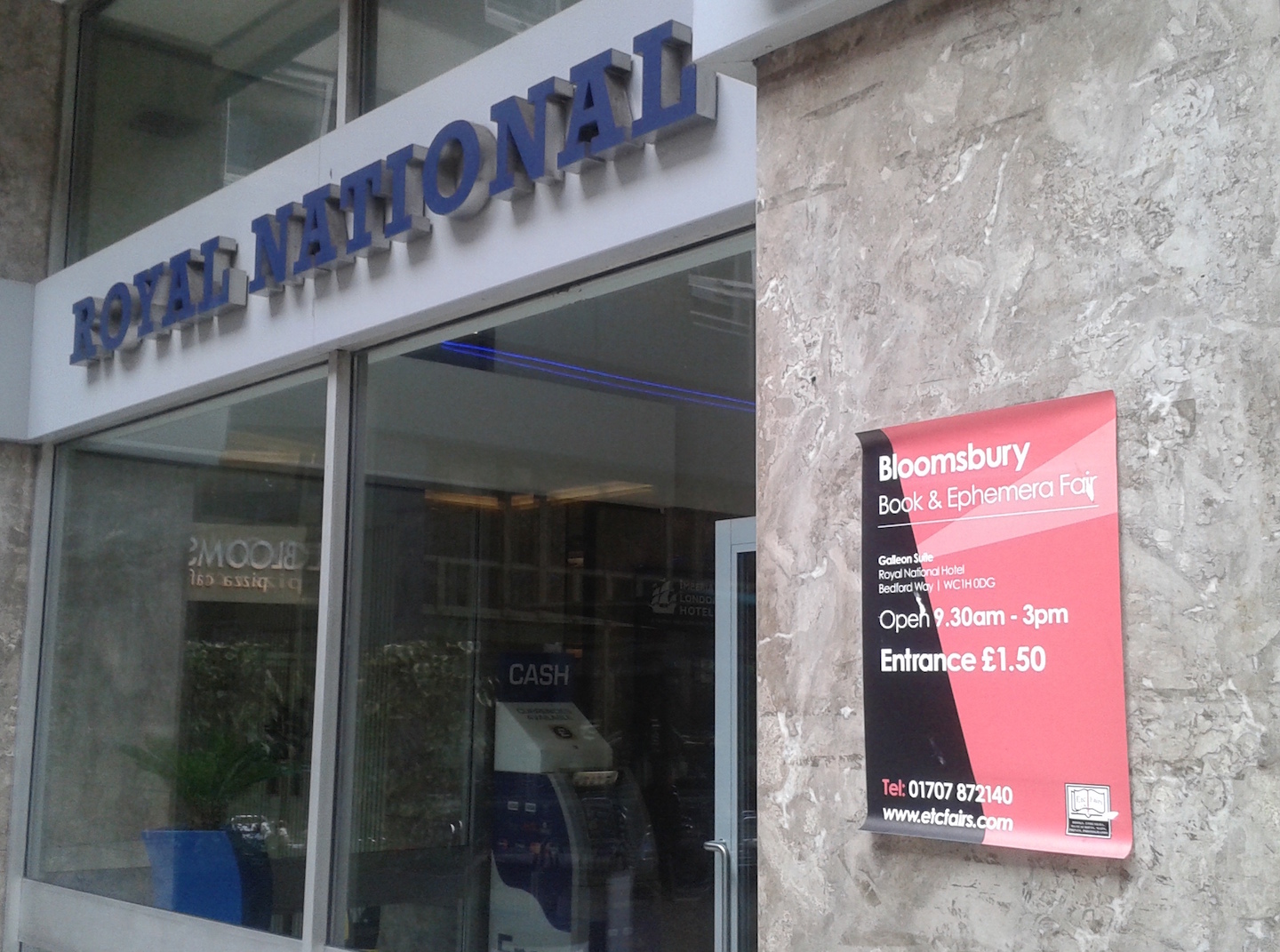
The two huge hauls came from two locales practically next door to each other: Skoob Books in the Brunswick Centre and the most recent Paperback & Pulp Book Fair, which took place at the Royal National Hotel on 29 October. The former I happened to stop in at during an excursion to London to discover they'd just got in a big SF collection; among other things I secured paperback firsts of Bruce Sterling's Schismatrix (a book that was very high up on my list of wants), John Varley's Wizard, Ian Watson's debut novel The Embedding, Gregory Benford's Against Infinity, plus various Haldemans (notably two parts of the Worlds trilogy, the third part of which I already had in hardback), a first printing of James Herbert's The Rats (not strictly SF, but I couldn't resist it; once upon a time I had a lot of time for Herbert) and a fair number of Larry Nivens and Jerry Pournelles.
I secured more Nivens and Pournelles at the Paperback & Pulp Book Fair – including a signed Ballantine first of The Long Arm of Gil Hamilton, a steal at two quid – and at the location of the more modest haul, Any Amount of Books on Charing Cross Road, where I also nabbed paperback firsts of Gordon R. Dickson's Dorsai trilogy and a bunch of Stephen Baxters, which make a nice set with a signed paperback first of Baxter's debut novel, Raft, I'd previously bought online. As for the Paperback & Pulp Fair itself, that offered up among other things first paperback editions of Bob Shaw's Orbitsville, Algis Budrys' Rogue Moon and Gordon R. Dickson's Necromancer, all of which I was keen to try, plus Orson Scott Card's Ender's Game, Kim Stanley Robinson's Icehenge, Anne McCaffrey's Restoree, a couple of Ursula Le Guins, and more besides.
And all of that's without getting into the SF I've picked up in Lewes and Brighton and one or two other places over the past few months – too many books to detail here, although I will just mention three by James Tiptree, Jr., alias Alice Sheldon, an author I was guided towards by Book Glutton and subsequently came across paperback first editions of her two novels in Lewes and Leigh-on-Sea and was given a collection of her short stories. I've only read a couple of the stories so far, but on the basis of those I'll certainly be reading more.
And with that, my 2017 SF odyssey is done – and so, more than likely, is my 2017 blogging, although I may manage to post a big long list of the books and comics I read before the year is out. Merry Christmas. (Not that there is anyone out there to wish Merry Christmas to...)
Tuesday, 26 September 2017
The Quantum Science Fiction Programme (1977–1981): Isaac Asimov, Ben Bova, John Varley, Gregory Benford et al
In 1977, a self-described "international publishing venture" was launched. Selected and edited by authors Isaac Asimov and Ben Bova (ostensibly; as Todd Mason notes in the comments, the real editor was D. R. Bensen) and published in the first instance by the Dial Press in the US, the Quantum Science Fiction programme proclaimed on the cover of its first book that it would be "presenting the best in modern science fiction". Over a five-year period nine books would be published under the Quantum umbrella – two per year, then one in the final year of the programme – penned by some of the brightest new talents in SF (plus a couple of older hands, including one of the editors). It was a Quantum project for the quantum age... and yet these days it barely merits a footnote in the history of SF.
I learned of the Quantum Science Fiction programme recently having become interested in the work of SF authors John Varley and Gregory Benford, who both had early novels issued under Quantum's imprimatur. Though the programme seems to have been a Dial Press (where Asimov was an editorial board member) initiative – aside from an isfdb list of series titles (which neglects to include Orson Scott Card's Songmaster) there's next to no information about it online – most of the books included (bar Card's two entries) were also published by Sidgwick & Jackson in the UK, and it's in those editions that I bought Varley's debut novel, The Ophiuchi Hotline, and Benford's fourth, In the Ocean of Night. With the books in my hands it was hard to miss the Quantum connection: where in the US they were issued with illustrated wrappers utilising a border design that deployed the Quantum identification discreetly, in the UK Sidgwick & Jackson used the Quantum 'Q' logo as the key element in their near-uniform typographic gold dust jacket designs.
The authors and books published in the Quantum Science Fiction Programme were as follows:
1. John Varley, The Ophiuchi Hotline (1977)
2. Gregory Benford, In the Ocean of Night (1977)
3. Gordon R. Dickson, The Far Call (1978)
4. John Varley, The Persistence of Vision (alias In the Hall of the Martian Kings) (1978)
5. Spider and Jeanne Robinson, Stardance (1979)
6. Ben Bova, Kinsman (1979)
7. Orson Scott Card, Songmaster (1980)
8. Joan D. Vinge, The Snow Queen (1980)
9. Orson Scott Card, Unaccompanied Sonata and Other Stories (1981)
I've no idea how well received the programme was at the time – the scant information available online suggests it's at least not terribly well remembered – but it certainly started strongly. Varley and Benford were I guess back then the (relatively speaking) 'hip young gunslingers' of science fiction, The Ophiuchi Hotline and In the Ocean of Night the opening shots in their respective Eight Worlds and Galactic Centre sagas: distinctive, exciting SF offering fresh perspectives on space opera. Thereafter, while the fourth Quantum offering, Varley's first short story collection, The Persistence of Vision – UK title In the Hall of the Martian Kings – was and is highly regarded, the third one, veteran Gordon R. Dickson's The Far Call, was and is perhaps less so – witness this withering contemporaneous Kirkus review and this scathing 2015 one (although this review from 2000 is kinder) – while the inclusion of fellow veteran Ben Bova's own Kinsman smacks slightly of favouritism.
In any case, the Quantum brand clearly propagated further than the Dial Press and Sidgwick & Jackson first editions. Subsequent paperback editions of some of the Quantum books also carried the 'Q' logo and the "international publishing venture" legend, while Sidgwick & Jackson seemingly did their best to extract as much capital as possible out of the brand by publishing three Quantum Specials – omnibuses which paired the initial six books in the series (counterparts to the publisher's long-running Science Fiction Special series), as follows:
Quantum Special 1 (1979): The Ophiuchi Hotline and In the Ocean of the Night
Quantum Special 2 (1981): The Far Call and In the Hall of the Martian Kings
Quantum Special 3 (1981): Stardance and Kinsman
Despite all this, by 1981 the Dial Press had dropped any mention of Quantum from the jacket (front or back) of the final book in the programme, Orson Scott Card's Unaccompanied Sonata and Other Stories (although it still carried the Quantum logo and the legend "A Quantum Book" on its title page). And that was pretty much it for Quantum Science Fiction – and pretty much as much as I've been able to find out about it. Still, at least in the unlikely event that anyone else goes looking for information about the programme – and I'm still wondering what on earth possessed me not only to do so myself, but to then write a fairly lengthy blog post about it – there's a bit more readily available now. And if anyone can shed any more light on Quantum, please do leave a comment.
Linked in Friday's Forgotten Books, 29/9/17.
I learned of the Quantum Science Fiction programme recently having become interested in the work of SF authors John Varley and Gregory Benford, who both had early novels issued under Quantum's imprimatur. Though the programme seems to have been a Dial Press (where Asimov was an editorial board member) initiative – aside from an isfdb list of series titles (which neglects to include Orson Scott Card's Songmaster) there's next to no information about it online – most of the books included (bar Card's two entries) were also published by Sidgwick & Jackson in the UK, and it's in those editions that I bought Varley's debut novel, The Ophiuchi Hotline, and Benford's fourth, In the Ocean of Night. With the books in my hands it was hard to miss the Quantum connection: where in the US they were issued with illustrated wrappers utilising a border design that deployed the Quantum identification discreetly, in the UK Sidgwick & Jackson used the Quantum 'Q' logo as the key element in their near-uniform typographic gold dust jacket designs.
The authors and books published in the Quantum Science Fiction Programme were as follows:
1. John Varley, The Ophiuchi Hotline (1977)
2. Gregory Benford, In the Ocean of Night (1977)
3. Gordon R. Dickson, The Far Call (1978)
4. John Varley, The Persistence of Vision (alias In the Hall of the Martian Kings) (1978)
5. Spider and Jeanne Robinson, Stardance (1979)
6. Ben Bova, Kinsman (1979)
7. Orson Scott Card, Songmaster (1980)
8. Joan D. Vinge, The Snow Queen (1980)
9. Orson Scott Card, Unaccompanied Sonata and Other Stories (1981)
I've no idea how well received the programme was at the time – the scant information available online suggests it's at least not terribly well remembered – but it certainly started strongly. Varley and Benford were I guess back then the (relatively speaking) 'hip young gunslingers' of science fiction, The Ophiuchi Hotline and In the Ocean of Night the opening shots in their respective Eight Worlds and Galactic Centre sagas: distinctive, exciting SF offering fresh perspectives on space opera. Thereafter, while the fourth Quantum offering, Varley's first short story collection, The Persistence of Vision – UK title In the Hall of the Martian Kings – was and is highly regarded, the third one, veteran Gordon R. Dickson's The Far Call, was and is perhaps less so – witness this withering contemporaneous Kirkus review and this scathing 2015 one (although this review from 2000 is kinder) – while the inclusion of fellow veteran Ben Bova's own Kinsman smacks slightly of favouritism.
In any case, the Quantum brand clearly propagated further than the Dial Press and Sidgwick & Jackson first editions. Subsequent paperback editions of some of the Quantum books also carried the 'Q' logo and the "international publishing venture" legend, while Sidgwick & Jackson seemingly did their best to extract as much capital as possible out of the brand by publishing three Quantum Specials – omnibuses which paired the initial six books in the series (counterparts to the publisher's long-running Science Fiction Special series), as follows:
Quantum Special 1 (1979): The Ophiuchi Hotline and In the Ocean of the Night
Quantum Special 2 (1981): The Far Call and In the Hall of the Martian Kings
Quantum Special 3 (1981): Stardance and Kinsman
Despite all this, by 1981 the Dial Press had dropped any mention of Quantum from the jacket (front or back) of the final book in the programme, Orson Scott Card's Unaccompanied Sonata and Other Stories (although it still carried the Quantum logo and the legend "A Quantum Book" on its title page). And that was pretty much it for Quantum Science Fiction – and pretty much as much as I've been able to find out about it. Still, at least in the unlikely event that anyone else goes looking for information about the programme – and I'm still wondering what on earth possessed me not only to do so myself, but to then write a fairly lengthy blog post about it – there's a bit more readily available now. And if anyone can shed any more light on Quantum, please do leave a comment.
Linked in Friday's Forgotten Books, 29/9/17.
Wednesday, 9 August 2017
2017: Odyssey to... Bookshops in Worthing, Leigh-on-Sea and Tunbridge Wells
The science fiction (primarily hard SF and space opera) book collecting odyssey begun in March of this year – in Lewes and thereafter pursued with vigour variously in London, Eastbourne, Chichester, the Isle of Wight and Brighton – has proceeded apace, with additional stops in, among other places, Worthing, Leigh-on-Sea, Tunbridge Wells and, naturally, Lewes and Brighton – those last two being my 'manor', so to speak.
The Worthing excursion, which took place in June and was combined with a mooch around a handful of seafront gaffs with my mum, Rachel and Edie to look at paintings and sculptures and photography and suchlike on the annual Worthing Artists Open Houses trail, was to the reliable Badger's Books (where I once purchased a signed Victor Canning first edition), the bijou science fiction section of which produced literally a handful of books. Clutched in my filthy paw there I have a 1976 New English Library paperback of Christopher Priest's first short story collection Real-Time World (with a cover by, I believe, Bruce Pennington); a 1987 Futura paperback of Kim Stanley Robinson's early novel The Memory of Whiteness; a 1980 New English Library paperback of Bruce Sterling's debut novel Involution Ocean; a 1975 Eyre Methuen first edition of Alfred Bester's Extro, alias The Computer Connection; a 1977 Heinemann first of Fred and Geoffrey Hoyle's The Incandescent Ones, and 1979 Millington firsts of Piers Anthony's Vicinity Cluster and Kirlian Quest, books one and three in the author's Cluster series.
By far the biggest haul of books came from the two bookcases of SF in Leigh Gallery Books in Leigh-on-Sea, Essex, which I visited twice on successive July days during a weekend trip to Rachel's folks' place nearby (twice because after the first visit I couldn't stop thinking about a book I didn't buy, so I went back the next day and got it – and some others). (I spared Rachel and Edie the tedium of having to hang around a secondhand bookshop by abandoning them on the little beach at Old Leigh after we'd had fish and chips for lunch – in the Mayflower pub – with Strangehaven creator Gary Spencer Millidge, who lives locally.)
Those visits produced books by, among others, Gregory Benford and Larry Niven (a 2015 Titan paperback of Shipstar, the sequel to their Bowl of Heaven), John Brunner (a 1974 New English Library paperback of The Dramaturges of Yan), Joe Haldeman (a 1992 New English Library first edition of Worlds Enough and Time, the third book in his Worlds trilogy), Ken Macleod (2001 and 2002 Orbit paperbacks of Cosmonaut Keep and Dark Light, books one and two in his Engines of Light series), Paul McAuley (a 2015 Gollancz paperback collection of his Confluence trilogy), Loren J. McGregor (a 1987 US Ace paperback of The Net), Naomi Mitchison (a 1976 New English Library reissue of Memoirs of a Spacewoman), Richard Morgan (a 2007 Gollancz first edition of Black Man, which was the book I couldn't stop thinking about and went back for the next day), Keith Roberts (a 1972 Panther paperback of The Inner Wheel) and Kim Stanley Robinson (a 2012 Orbit first edition of 2312).
The 'among others' were probably the more interesting books of the haul; more interesting to me anyway – your mileage may vary – but in any case those were the ones I was more inclined to go to the trouble of photographing. Top row, left to right: a first edition of Piers Anthony's debut novel Chthon (MacDonald, 1967); a first (ex-library) of John Paget's (alias John Aiken) World Well Lost (Robert Hale, 1970), another of those intriguing Hale SF books I've been picking up here and there; a first hardback edition of John Brunner's Times Without Number (Elmfield Press, 1974), jacket by Josh Kirby; a first of Cordwainer Smith's The Rediscovery of Man (Gollancz, 1988), jacket by John Avon. Middle row, left to right: paperbacks of John Varley's short story collection The Barbie Murders (Futura reprint, 1986) – which contains some of his Eight Worlds tales – and novel Millennium (Sphere, 1985); a paperback first of Gregory Benford's Across the Sea of Suns (Orbit, 1985), second in Benford's Galactic Centre saga; a paperback first of Murasaki (Grafton, 1993), a shared world anthology edited by Robert Silverberg and written by Benford, Greg Bear, Poul Anderson and others. Bottom row, left to right: a paperback first of Christopher Priest's A Dream of Wessex (Pan, 1978), his fifth novel; and paperbacks of Brian Aldiss's Earthworks (Granada/Panther, 1979, cover by Peter Goodfellow) and Enemies of the System (Triad/Panther, 1980), both of which are signed.
Tubridge Wells I took the bus over to on a rainy day late in July having learned that Hall's Bookshop (which I wrote about a couple of years ago when it was taken over by Adrian Harrington) was having a summer half price sale. There wasn't a lot of science fiction on offer, but I did manage to find one or two – or three or four – intriguing items, namely...
A British first edition of John Brunner's Total Eclipse (Weidenfeld & Nicolson, 1975); a US first edition of Brunner's A Maze of Stars (Del Rey, 1991), jacket by John Berkey; a British first of Brunner's The Wrong End of Time (Eyre Methuen, 1975), and a US first of A. E. van Vogt's Rogue Ship (Doubleday, 1965), jacket by Peter Rauch.
Two of the Brunners, Total Eclipse and A Maze of Stars, are the late author's own copies, both bearing his 'ex libris' bookplate on their front pastedowns. (The Wrong End of Time may well be Brunner's own copy as well, but it doesn't have a bookplate.) The van Vogt, on the other hand, has on its front free endpaper a heartfelt 21st birthday inscription (non-authorial) to a Marty from his "understanding but confused friend and athletic foe, Barry," who also advises Marty to "keep cool".
As for the wares from Lewes and Brighton – and other such exotic locales – I think I'll save those for another post. This one's quite long enough as it is.
Thursday, 15 June 2017
The Secondhand Bookshops of the Isle of Wight, or, Wot I Did on My Summer Holidays
It's been a few years since I last did a 'secondhand bookshops wot I visited on holiday and the books wot I bought' post, for the simple reason that it's been a few years since I've been on a holiday where visiting secondhand bookshops and buying books was any kind of prospect. Happily, last week's week-long excursion to the Isle of Wight presented a number of opportunities for browsing in bookshops, and knowing how much my largely imaginary audience has enjoyed previous accounts of my ridiculous holidays, I decided I'd document the books-related bits of this one too. You're very welcome, my nonexistent readership.
Before we got the ferry over to the Isle of Wight I established (via Inprint's Bookshop Guide) that there are eight secondhand bookshops dotted about the island. Given that this was supposed to be a holiday and not merely a flimsy excuse for my seeking out secondhand bookshops, I thought it unlikely I'd get to visit more than a couple, but in the end, to my surprise, I managed to make it to half. (It would've been more but Babushka Books in Shanklin was inexplicably shut when I visited. Or maybe not so inexplicably, considering the vagaries of secondhand bookshop opening times.) However, by far the biggest haul of books came from a comic shop.
First port of call was the Mother Goose Bookshop on the village green in St. Helens, on the east side of the island. I only had a limited amount of time to investigate as we were on our way to the seaside town of Ryde, a little further up the coast, but it was a sizeable shop with an extensive stock of modern firsts (and plenty of non-fiction too). After a survey of the shelves I located in the crime and thriller section a first edition of The Double Agent (Gollancz, 1966), the first spy novel by ex-spy (and reportedly the inspiration for George Smiley) John Bingham – a book I've had on my list for quite some time.
That find paled in comparison to the riches Ryde itself offered up. I'd intended to head straight to the Ryde Bookshop, a fair way up the hilly high street, but on the way I noticed a comic shop, the splendidly named Fantastic Store, and decided to pop in. On first inspection it seemed to stock mostly back issues, graphic novels and collectables, as one would expect of a comic shop, but a further survey revealed a few shelves of hardback and paperback fiction. This turned out to be largely science fiction, a fair amount of it first editions (albeit ex-library in some cases – those keenly priced, mind, at two quid a pop) – just the sort of thing I was hoping to stumble upon given my recently reignited enthusiasm for SF. Accordingly, I went a little crazy. Besides the 1971 Science Fiction Book Club edition of Murray Leinster's The Listeners seen above, I also came away with nine other books, most of them space opera of one sort or another:
Top row left to right: a US first edition of Gregory Benford's Great Sky River (Bantam/Spectra 1987, jacket by Roger Bergendorf), the third novel in Benford's Galactic Centre Saga – the first being In the Ocean of the Night, which I bought online few weeks ago; a first edition of Wulfsyarn by Phillip Mann (Gollancz, 1990, jacket by John Brettoner); a first edition of The Brooch of Azure Midnight by Anne Gay (Orbit, 1991, jacket by Fred Gambino); and a first edition of Eternal Light by Paul J. McAuley (Gollancz, 1991, jacket by John Brettoner again), the third and final novel in McAuley's Four Hundred Billion Stars Series – the first being Four Hundred Billion Stars itself, which again I bought online a few weeks ago. Bottom row left to right: A. E. Van Vogt's Children of Tomorrow (Sidgwick & Jackson, 1972); James Blish's Midsummer Century (Faber, 1973); Clifford D. Simak's Cemetery World (Sidgwick, 1975); John Wyndham's Exiles on Asperus (Severn House, 1979), and Paul J. McAuley's short story collection The King of the Hill (Gollancz, 1991).
Phew. After all that excitement, Ryde Bookshop initially looked somewhat unpromising, its stock comprising remainder and newish books. However, an easily overlooked – not least because it was closed – door in the back room opened onto the secondhand bookshop proper. Slightly labyrinthine in nature and arranged over a few floors and staircases, it was overflowing with books, a lot of them either the kind of hardback fiction one sees littering charity shops, or not terribly interesting paperbacks. But there was a sizeable SF section, and some decent books secreted therein. I came away with these:
A first edition/printing of Alastair Reynolds' Terminal World (Gollancz, 2010); a first paperback edition of John Varley's debut novel The Ophiuchi Hotline (Orbit/Futura, 1978; I already had a Sidgwick & Jackson hardback first, but I couldn't resist that Chris Foss cover); a 1997 Vista paperback of Paul J. McAuley's Secret Harmonies (originally 1989, and the second in the Four Hundred Billion Stars Series), and a first paperback edition of Alastair Reynolds' Century Rain (Gollancz, 2005).
The next day I made it to one of the two secondhand bookshops situated in Freshwater, near the Needles on the west coast of the island. The charming and inviting Mrs. Middleton's Shop had a small selection of fiction but specialised more in local authors and books about the Isle of Wight (while I was there another customer asked after a particular Isle of Wight book and was immediately rewarded). Nevertheless, I came away with a 1969 New English Library paperback of A. E. van Vogt's The Weapon Shops of Isher (cover by Bruce Pennington), plucked from the bijou shop's equally bijou shelf of science fiction paperbacks. When I asked Mrs. Middleton – I presume it was she – if the other Freshwater bookshop, Cameron House Books down near Freshwater Bay, had a bigger selection of modern firsts she confirmed that it did, but advised that the owner tended to close at four – earlier if custom was slow. This was at just after three, so I reckoned I was in with a shot. Alas, by the time we got there...
...it was shut. Curses. Fortunately we were able to make a return visit the next day, and even more fortunately this time it was open!
Just as bijou as Mrs. Middleton's but boasting a much bigger selection of modern firsts, Cameron House Books is housed in Dimbola Lodge, once the home of Victorian photographer Julia Margaret Cameron and now a gallery devoted to her work and that of other photographers (it's well worth a visit if you're ever in the area, if only for the excellent lemon drizzle cake served in the cafe). The bookshop comprises just two smallish rooms, but I must've spent a good half hour browsing its wares, at the end of which I'd ferreted out five science fiction first (and other) editions (again some ex-library – evidently the Isle of Wight County Library's loss was the local bookshops' gain – but again keenly priced):
Top row left to right: Dark Constellation by Alex Random (Robert Hale, 1975); The Omega Worm by Douglas R. Mason (Hale, 1976), and Another Eden by W. D. Pereira (Hale, 1976). Bottom row: Threads of Time (Millington, 1975), edited and introduced by Robert Silverberg and containing novellas by Gregory Benford (Threads of Time), Clifford D. Simak (The Marathon Photograph) and Norman Spinrad (Riding the Torch); and Yesteday's Children by David Gerrold (Readers Union, 1975).
Not a bad haul. And not a bad holiday either. (And the non-books bits weren't bad neither.)
Before we got the ferry over to the Isle of Wight I established (via Inprint's Bookshop Guide) that there are eight secondhand bookshops dotted about the island. Given that this was supposed to be a holiday and not merely a flimsy excuse for my seeking out secondhand bookshops, I thought it unlikely I'd get to visit more than a couple, but in the end, to my surprise, I managed to make it to half. (It would've been more but Babushka Books in Shanklin was inexplicably shut when I visited. Or maybe not so inexplicably, considering the vagaries of secondhand bookshop opening times.) However, by far the biggest haul of books came from a comic shop.
First port of call was the Mother Goose Bookshop on the village green in St. Helens, on the east side of the island. I only had a limited amount of time to investigate as we were on our way to the seaside town of Ryde, a little further up the coast, but it was a sizeable shop with an extensive stock of modern firsts (and plenty of non-fiction too). After a survey of the shelves I located in the crime and thriller section a first edition of The Double Agent (Gollancz, 1966), the first spy novel by ex-spy (and reportedly the inspiration for George Smiley) John Bingham – a book I've had on my list for quite some time.
That find paled in comparison to the riches Ryde itself offered up. I'd intended to head straight to the Ryde Bookshop, a fair way up the hilly high street, but on the way I noticed a comic shop, the splendidly named Fantastic Store, and decided to pop in. On first inspection it seemed to stock mostly back issues, graphic novels and collectables, as one would expect of a comic shop, but a further survey revealed a few shelves of hardback and paperback fiction. This turned out to be largely science fiction, a fair amount of it first editions (albeit ex-library in some cases – those keenly priced, mind, at two quid a pop) – just the sort of thing I was hoping to stumble upon given my recently reignited enthusiasm for SF. Accordingly, I went a little crazy. Besides the 1971 Science Fiction Book Club edition of Murray Leinster's The Listeners seen above, I also came away with nine other books, most of them space opera of one sort or another:
Top row left to right: a US first edition of Gregory Benford's Great Sky River (Bantam/Spectra 1987, jacket by Roger Bergendorf), the third novel in Benford's Galactic Centre Saga – the first being In the Ocean of the Night, which I bought online few weeks ago; a first edition of Wulfsyarn by Phillip Mann (Gollancz, 1990, jacket by John Brettoner); a first edition of The Brooch of Azure Midnight by Anne Gay (Orbit, 1991, jacket by Fred Gambino); and a first edition of Eternal Light by Paul J. McAuley (Gollancz, 1991, jacket by John Brettoner again), the third and final novel in McAuley's Four Hundred Billion Stars Series – the first being Four Hundred Billion Stars itself, which again I bought online a few weeks ago. Bottom row left to right: A. E. Van Vogt's Children of Tomorrow (Sidgwick & Jackson, 1972); James Blish's Midsummer Century (Faber, 1973); Clifford D. Simak's Cemetery World (Sidgwick, 1975); John Wyndham's Exiles on Asperus (Severn House, 1979), and Paul J. McAuley's short story collection The King of the Hill (Gollancz, 1991).
Phew. After all that excitement, Ryde Bookshop initially looked somewhat unpromising, its stock comprising remainder and newish books. However, an easily overlooked – not least because it was closed – door in the back room opened onto the secondhand bookshop proper. Slightly labyrinthine in nature and arranged over a few floors and staircases, it was overflowing with books, a lot of them either the kind of hardback fiction one sees littering charity shops, or not terribly interesting paperbacks. But there was a sizeable SF section, and some decent books secreted therein. I came away with these:
A first edition/printing of Alastair Reynolds' Terminal World (Gollancz, 2010); a first paperback edition of John Varley's debut novel The Ophiuchi Hotline (Orbit/Futura, 1978; I already had a Sidgwick & Jackson hardback first, but I couldn't resist that Chris Foss cover); a 1997 Vista paperback of Paul J. McAuley's Secret Harmonies (originally 1989, and the second in the Four Hundred Billion Stars Series), and a first paperback edition of Alastair Reynolds' Century Rain (Gollancz, 2005).
The next day I made it to one of the two secondhand bookshops situated in Freshwater, near the Needles on the west coast of the island. The charming and inviting Mrs. Middleton's Shop had a small selection of fiction but specialised more in local authors and books about the Isle of Wight (while I was there another customer asked after a particular Isle of Wight book and was immediately rewarded). Nevertheless, I came away with a 1969 New English Library paperback of A. E. van Vogt's The Weapon Shops of Isher (cover by Bruce Pennington), plucked from the bijou shop's equally bijou shelf of science fiction paperbacks. When I asked Mrs. Middleton – I presume it was she – if the other Freshwater bookshop, Cameron House Books down near Freshwater Bay, had a bigger selection of modern firsts she confirmed that it did, but advised that the owner tended to close at four – earlier if custom was slow. This was at just after three, so I reckoned I was in with a shot. Alas, by the time we got there...
...it was shut. Curses. Fortunately we were able to make a return visit the next day, and even more fortunately this time it was open!
Just as bijou as Mrs. Middleton's but boasting a much bigger selection of modern firsts, Cameron House Books is housed in Dimbola Lodge, once the home of Victorian photographer Julia Margaret Cameron and now a gallery devoted to her work and that of other photographers (it's well worth a visit if you're ever in the area, if only for the excellent lemon drizzle cake served in the cafe). The bookshop comprises just two smallish rooms, but I must've spent a good half hour browsing its wares, at the end of which I'd ferreted out five science fiction first (and other) editions (again some ex-library – evidently the Isle of Wight County Library's loss was the local bookshops' gain – but again keenly priced):
Top row left to right: Dark Constellation by Alex Random (Robert Hale, 1975); The Omega Worm by Douglas R. Mason (Hale, 1976), and Another Eden by W. D. Pereira (Hale, 1976). Bottom row: Threads of Time (Millington, 1975), edited and introduced by Robert Silverberg and containing novellas by Gregory Benford (Threads of Time), Clifford D. Simak (The Marathon Photograph) and Norman Spinrad (Riding the Torch); and Yesteday's Children by David Gerrold (Readers Union, 1975).
Not a bad haul. And not a bad holiday either. (And the non-books bits weren't bad neither.)
Friday, 2 June 2017
2017: A Science Fiction Odyssey
It's all The Forever War's fault.
Actually, way back when the Earth was young (or at least it sometimes feels that far back), it's probably fairer to say it was the fault of Doctor Who novelisations and Ray Bradbury collections and Glenn Chandler's short story "Bobo's Star" (an alarming tale with a mind-blowingly bleak ending which properly shat me up when I read it in the 1979 anthology Space 5, alongside Bradbury's equally unnerving "A Sound of Thunder"), all of which got me hooked on science fiction as a kid (most of those books borrowed from Beckenham Library). But in the here(ish) and now(ish) it was reading Joe Haldeman's 1974 novel that got me back into science fiction in a major way.
Not that I'd completely stopped reading (and collecting) SF, although in recent years my forays into the genre have either been at the more dystopian end of the scale – J. G. Ballard's High-Rise, Emily St. John Mandell's Station Eleven and Justin Cronin's The City of Mirrors spring to mind – or taken the form of comics like Jonathan Hickman and Nick Dragotta's East of West or Gabriel Hardman and Corinna Bechko's Invisible Republic. It was more that, for the most part, SF had taken a back seat to crime fiction, spy fiction and, increasingly over the last year or so, comics and graphic novels (constant companions, but ones that have been diverting more of my attention in recent years).
Then in March of this year I bought a British first edition of The Forever War at the Lewes Book Fair, and read it, and loved it, and found that I'd rediscovered my fervour for SF. I set about looking for books similar to The Forever War, a quest which led me to the kind of contemporary hard (well 'ard mate) SF that has its roots in the work of Arthur C. Clarke (a writer I was already more than familiar with) and the new form of space opera that came to prominence from the late 1970s. In charity shops and secondhand bookshops in Lewes and Brighton and Chichester and Eastbourne I turned up a stack of science fiction first (and other) editions (notably a ten-book haul from Camilla's in Eastbourne, ferretted out from that shop's precarious multi-layered piles) by Alastair Reynolds, Gregory Benford, Bruce Sterling, M. John Harrison, Stephen Baxter and Clarke himself, while explorations online turned up key works by Reynolds, Benford, Paul J. McAuley and John Varley.
My guide through all of this, often as not, has been the afterword in Alastair Reynolds' collection of short stories Galactic North (a first edition of which I found in Brighton's Oxfam Books), which details the inspiration for the Revelation Space universe stories Galactic North is a part of – a future history I'll be further investigating (I snagged a scarce hardback first edition of Revelation Space itself online for less than a tenner – an absolute steal) alongside Reynolds' other work (I've already read his recent novella Slow Bullets, his 2016 novel Revenger and his and Stephen Baxter's The Medusa Chronicles – all three in signed first editions).
Then there are the many vintage SF paperbacks I've been picking up here, there and everywhere – at April's Paperback and Pulp Bookfair in London, in Kim's in Chichester, in Revive-All in the Needlemakers in Lewes and in Ubu Books in Brighton's Open Market – books by Clifford D. Simak, Samuel R. Delany, Gavin Lyall (of all people), Robert A. Heinlein, Keith Roberts, Christopher Priest, Louis Trimble, Edmund Cooper, Colin Kapp, Joe Haldeman (him again), Gordon R. Dickson and Barrington J. Bayley, sporting fabulous cover art by the likes of John Schoenherr, Ed Valigursky, Jerome Podwil, Jack Gaughan, Bob Haberfield, Chris Foss, Frank Kelly Freas, Tony Roberts, Josh Kirby and Peter Elson.
Add to those another stack of more modern space opera by David Brin, Greg Bear, Kim Stanley Robinson and Peter F. Hamilton, acquired at the most recent Lewes Book Fair, plus a couple more Hamiltons bought from Brighton's Savery Books, and it seems I have quite a bit of reading ahead of me, about which I'm quite excited. Which is good because, to be frank, prior to reading The Forever War I'd pretty much lost all enthusiasm for prose fiction; I think I only managed to read six novels last year – and most of those in the first month or two – and this year was looking like it was heading in a similar direction until Haldeman, Harrison (whose Light – a 2002 first edition of which I bought ages ago – I also recently read and loved), Reynolds and the rest hoved into view. So hooray for them, and for space opera, and for science fiction... and for me too. My 2017 SF odyssey... continues.
Subscribe to:
Posts (Atom)